
Public Speaking for Kids – Build Confidence, Clarity & Courage
Public Speaking for Kids is more than just an extracurricular activity – it’s a life skill that builds confidence, communication & courage. At LearnifyU, we empower children to find their voice and speak up in the competitive world.
Whether your child is shy, speaks softly, or simply needs a confidence push, our public speaking classes are tailored to support and transform them. Through engaging lessons, stage practice, and interactive learning, we help children evolve into clear, impactful speakers.
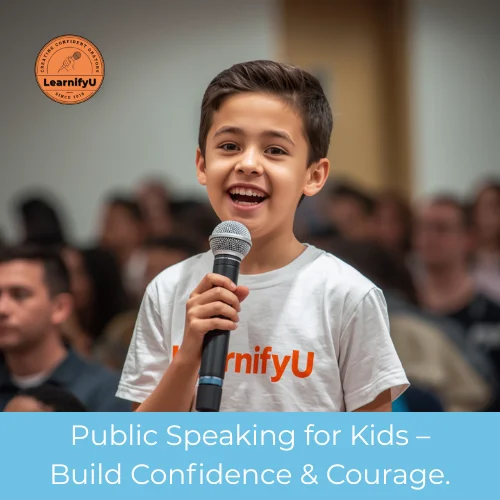
Why Public Speaking for Kids Matters
Public speaking for kids is about more than standing on a stage and delivering a speech. It helps children learn to organise their thoughts, express their ideas clearly, listen to others, and communicate with greater confidence in everyday situations.
From answering questions in class to sharing a story with friends or presenting a school project, children have many opportunities to practise these skills. With age-appropriate activities, regular practice, and constructive feedback, they can gradually become more comfortable expressing themselves.
In today’s fast-paced world, strong communication isn’t just important — it’s essential. Children who develop public speaking skills in the early years gain:
1. Builds Confidence in Expressing Ideas
Speaking in a supportive environment gives children opportunities to share their thoughts, express opinions, and become more comfortable communicating with others.
2. Improves Clarity and Organisation
Preparing a speech teaches children to introduce a topic, arrange ideas logically, explain key points, and bring their message to a clear conclusion.
3. Strengthens Listening and Communication Skills
Good communication involves more than speaking. Children also practise listening carefully, responding to questions, taking turns, and considering different perspectives.
4. Develops Presentation Skills
Through storytelling, speeches, role-play, and presentations, children can practise voice clarity, pace, posture, gestures, and audience awareness.
5. Encourages Critical and Creative Thinking
Choosing a topic, developing an opinion, supporting an idea with reasons, and responding to an unexpected question encourage children to think independently and communicate their reasoning.
6. Prepares Children for Everyday Speaking Opportunities
Whether participating in a classroom discussion, presenting a school project, joining a debate, or speaking at a school event, children can apply public speaking skills in different situations.
At LearnifyU, children aged 4–14 practise these skills through interactive learning activities, speaking exercises, and guided feedback. The aim is to help each child develop at a comfortable pace and communicate more clearly and confidently over time.
Quick Facts & Stats 📊
- Nearly 77% of adults suffer from glossophobia, which is fear of public speaking. Source: Very Well Mind
The longer young people participate in a structured youth development program, the greater their improvement in public speaking confidence can be. Source: California Agriculture
The LearnifyU Advantage: Learning Public Speaking Through Practice
Learning to speak confidently takes more than memorising a speech. Children need opportunities to express their ideas, practise different speaking situations, receive constructive feedback, and apply what they learn.
At LearnifyU, our public speaking program focuses on helping children develop communication and presentation skills through interactive learning and guided speaking practice. We aim to create a supportive environment where children can express themselves, learn from experience, and improve at their own pace.
Learning Through Active Participation
Children develop speaking skills by using them. Activities such as storytelling, speech preparation, presentations, and discussions give them opportunities to put their learning into practice.
Guidance That Supports Improvement
Constructive feedback can help children recognise what they are doing well and identify areas to work on, whether that means organising their ideas, speaking more clearly, or improving their delivery.
Activities Suited to Different Ages
A young child learning to tell a short story has different needs from an older child preparing a structured presentation. Age-appropriate activities help make speaking practice relevant to children’s developmental stages and abilities.
More Than Memorising Speeches
Effective public speaking involves thinking, listening, organising ideas, and responding to an audience. Children need opportunities to develop these skills rather than relying only on memorised scripts.
Skills Children Can Practise Beyond the Classroom
The ability to explain an idea, ask a question, share an opinion, and present information is useful in many everyday situations. Public speaking practice gives children opportunities to work on these skills in a structured learning environment.
Live Online Public Speaking Classes for Kids
Children can develop public speaking skills from the comfort of their homes through LearnifyU’s live online classes. With structured activities & opportunities to practise, children can work on their communication & presentation skills in a familiar environment. Parents can learn more about what happens in an online public speaking class before deciding whether the format suits their child.
Our goal is to nurture confident communicators who can express themselves clearly and lead without fear.
What Children Learn in LearnifyU's Public Speaking Program
Every child has ideas worth sharing. Our public speaking program helps children turn those ideas into clear, engaging communication through guided practice, creative activities, and age-appropriate speaking exercises.
Children learn how to structure a speech, tell a story, use their voice effectively, communicate through body language, and express their thoughts in front of others. They also practise listening, thinking on their feet, and responding to questions.
Speech Crafting & Structure
Children learn how to write and organize their thoughts into speeches — introductions, main points, conclusions.
Voice Clarity & Modulation
We help kids develop strong, clear voices with the right tone, volume, and pace.
Overcoming Stage Fear
Through mock sessions, storytelling, and drama, we help reduce anxiety and build stage confidence.
Body Language and Eye Contact
Kids are taught how to use posture, gestures & expressions to communicate effectively.
Creative Thinking & Confidence Building
Each child is encouraged to think on their feet, express original thoughts, and stay calm under pressure.
Impromptu Speaking
Children practise responding to age-appropriate prompts, answering questions, & expressing opinions.
Who Is This Public Speaking Program For? 📝
Every child communicates differently. Some love sharing stories and speaking in front of others, while some need more time and encouragement to express their thoughts. LearnifyU’s public speaking program is designed for children aged 4–14 who want to develop their speaking, communication, and presentation skills through guided practice.
Our program can be a good fit for children who want to:
- Kids aged 4–14 who want to speak more confidently
- Children Who Feel Shy About Speaking
- Students preparing for school presentations or competitions
- Children interested in debates, drama, or leadership roles
- Parents looking to improve their child’s communication skills
- Children Who Want to Express Their Ideas More Clearly

Public Speaking Classes for Kids by Age Group
Children develop communication skills at different stages. LearnifyU’s public speaking program helps children aged 4–14 practise age-appropriate speaking activities, from early expression and storytelling to structured speeches and presentations.
Public Speaking for Kids Aged 4–6
Young children can begin with simple storytelling, describing familiar experiences, and speaking in short sentences. These activities encourage self-expression, listening, and comfort with sharing ideas.
Public Speaking for Kids Aged 7–9
Children can practise organising their thoughts, telling stories in sequence, preparing short speeches, and speaking about familiar topics. Activities help them communicate ideas more clearly.
Public Speaking for Kids Aged 10–12
At this stage, children can work on structuring longer speeches, delivering presentations, expressing opinions with reasons, and responding to questions. Guided practice helps them refine their delivery and communication.
Public Speaking for Kids Aged 13–14+
Older children can explore more advanced presentations, persuasive speaking, impromptu speaking, and debate fundamentals. These activities encourage thoughtful expression, audience awareness, and the ability to explain and support ideas.
Every child develops at a different pace. Activities should be adapted to each learner’s experience, interests, and readiness rather than age alone.
Key Benefits of Public Speaking for Children 🌟
A child who learns to speak confidently is one who learns to lead. Our program positively impacts:
Improved participation in class
Better performance in debates, recitations, and storytelling
Higher academic confidence
Stronger interviews and group discussions
Better networking and social confidence
Leadership presence
Articulate communication
Professional growth
Communication is a lifelong asset — we just help unlock it early.
How Do LearnifyU’s Online Public Speaking Classes Work?
Children develop public speaking skills by practising, receiving guidance, and learning how to express their ideas clearly. LearnifyU’s live online public speaking classes give children opportunities to participate in speaking activities and build their communication skills in a supportive learning environment.
❶ Learn Through Live Online Sessions
Children participate in live online classes where they can practise expressing their thoughts, sharing ideas, and developing their speaking skills with guidance from an instructor.
❷ Take Part in Interactive Speaking Activities
Activities such as storytelling, speech practice, and presentations give children opportunities to apply what they learn rather than simply memorise information.
❸ Practise Speaking and Receive Guidance
With guided practice and constructive feedback, children can work on organising their ideas, speaking clearly, and improving how they communicate.
❹ Build Skills Through Continued Practice
Public speaking develops over time. Regular opportunities to speak, reflect, and improve can help children become more comfortable expressing themselves in different situations.
❺ Find the Right Starting Point for Your Child
Every child has different interests, strengths, and learning needs. Parents can connect with LearnifyU to understand the program, discuss their child’s needs, and explore the next steps for enrolment.
Ready to begin?
The first step starts with a simple call. Book a Free Demo Now 👇
Explore Public Speaking Classes for Kids by Country
LearnifyU offers live online public speaking classes for children aged 4–14 across multiple countries. Explore your country’s page to learn more about our program and how it helps children develop speaking, communication, and presentation skills.
Public Speaking Classes for Kids in India
Explore LearnifyU’s public speaking program for children in India, with information for parents looking to develop their child’s communication and presentation skills.
Public Speaking Classes for Kids in the UAE
Discover LearnifyU’s online public speaking classes for children in the UAE and learn how guided speaking practice can support their communication skills.
Public Speaking Classes for Kids in the USA
Learn more about LearnifyU’s public speaking program for children in the United States and explore opportunities to develop speaking and presentation skills through online learning.
Other Countries We Serve
LearnifyU’s live online public speaking program is also available to families in the following countries. Select your country to explore the relevant page.
Canada | United Kingdom | Australia | Singapore | New Zealand | Germany
🛠️ Our Methodology
LearnifyU uses a research-based, child-centric training approach:
- Gamified learning: Quizzes, games, and challenges keep it engaging
- Micro-feedback: Weekly reviews of voice clarity, posture, and delivery
- Safe spaces: No judgment zones that encourage experimentation
- Small batches: Maximum 6–8 kids per group for personalized attention
- Parent involvement: Regular feedback to parents via calls & reports
📚 Add-On Skillsets (Included)
Our Public Speaking for Kids program also strengthens:
- Spoken English for Kids
- Communication Skills for Kids
- Grammar and Vocabulary
- Creative Writing and Reading Comprehension
- Stage Presence and Confidence Activities
These interconnected skills prepare your child not just for public speaking — but for life.
🗣️ What Do Parents Say About Us


 Trustindex verifies that the original source of the review is Google.
 Trustindex verifies that the original source of the review is Google.
 Trustindex verifies that the original source of the review is Google.
 Trustindex verifies that the original source of the review is Google.
 Trustindex verifies that the original source of the review is Google.
 Trustindex verifies that the original source of the review is Google.
Before LearnifyU
- Shy and Nervous
- Mumbles or Hesitates
- Avoids Stage
After LearnifyU
- Confident and Expressive
- Clear Speech, Powerful Delivery
- Hosts and Leads Events
FAQs - Public Speaking for Kids Program
Children can begin developing public speaking skills from an early age. LearnifyU’s program is designed for children aged 4–14, with activities suited to their developmental stage, interests, and speaking experience.
Public speaking classes can give shy children opportunities to practise expressing their thoughts in a supportive learning environment. With regular practice and supportive guidance, children can gradually become more comfortable sharing their ideas and explore strategies for becoming confident speakers.
Children can develop skills such as organising their thoughts, speaking clearly, using appropriate body language, storytelling, preparing speeches, and presenting ideas. The specific activities depend on the program’s curriculum and the child’s learning level.
Live online classes can provide children with opportunities to practise speaking, participate in interactive activities, and receive guidance from an instructor. Their learning experience also depends on regular participation, suitable activities, and opportunities to practise beyond class.
Spoken English classes primarily focus on language proficiency, such as vocabulary, grammar, pronunciation, and conversational fluency. Public speaking focuses on communicating ideas effectively through speech structure, delivery, audience awareness, and presentation skills. The two can complement each other, but they serve different learning goals.
Public speaking and spoken English classes focus on different skills. Learn more about the difference between public speaking and spoken English.
Parents can consider the child’s age, learning needs, class format, teaching approach, opportunities for speaking practice, and the kind of feedback provided. It is also helpful to understand the curriculum and discuss how the program supports children at different experience levels.
Yes. LearnifyU offers live online learning for children internationally. Parents can explore the relevant country page for more information about the program in their region:
General Questions Parent Ask
Give your child regular, low-pressure opportunities to express ideas, tell stories, explain something they enjoy, or share a short presentation. Encourage their effort rather than expecting perfect delivery. Structured public speaking practice can also help children work on organising thoughts, speaking clearly, and becoming more comfortable addressing an audience over time.
Public speaking classes can help children practise skills they use in school presentations, such as organising information, explaining ideas clearly, using appropriate body language, and speaking to an audience. How much these skills transfer depends on the child’s practice, learning needs, and opportunities to use them at school.
Look for gradual changes in how your child expresses ideas, explains a story, organises thoughts, speaks audibly, answers questions, or presents information. Progress may also show in greater willingness to participate. Children develop at different rates, so compare your child’s current abilities with their own starting point rather than with other children.
Make speaking part of everyday family activities. Ask your child to explain their favourite game, retell a story, describe something they learned, or share an opinion and explain why they hold it. Keep activities enjoyable and age-appropriate, listen without interrupting, and offer encouraging feedback. Short, regular opportunities can help children practise expressing themselves. Public speaking activities to try at home: 10 Public Speaking Activities for Kids at Home.
Public speaking is the broader skill of communicating ideas to an audience. Presentation skills focus on structuring and delivering information clearly, while debate involves developing arguments, supporting opinions with reasons or evidence, and responding to opposing viewpoints. These skills overlap, but each involves different types of practice.
Look for an age-appropriate curriculum, opportunities for children to speak actively during sessions, clear instruction, constructive feedback, and activities that match your child’s experience and learning needs. Parents should also check the class format, schedule, instructor qualifications, and how the program explains or reviews a child’s progress before enrolling.
Yes. Public speaking is a skill children can practise and develop; being naturally outgoing is not a requirement. Children who are quieter may benefit from beginning with familiar topics, short speaking activities, and supportive opportunities to participate. The goal is not to change a child’s personality, but to help them communicate their ideas more comfortably and effectively.