
Why Communication Skills Are Becoming Essential for Children in Singapore
Parents in Singapore have always placed a strong emphasis on education. Alongside academic achievement, communication skills for children in Singapore are becoming equally important as classrooms increasingly encourage students to discuss ideas, work in teams, present projects and explain their thinking clearly.
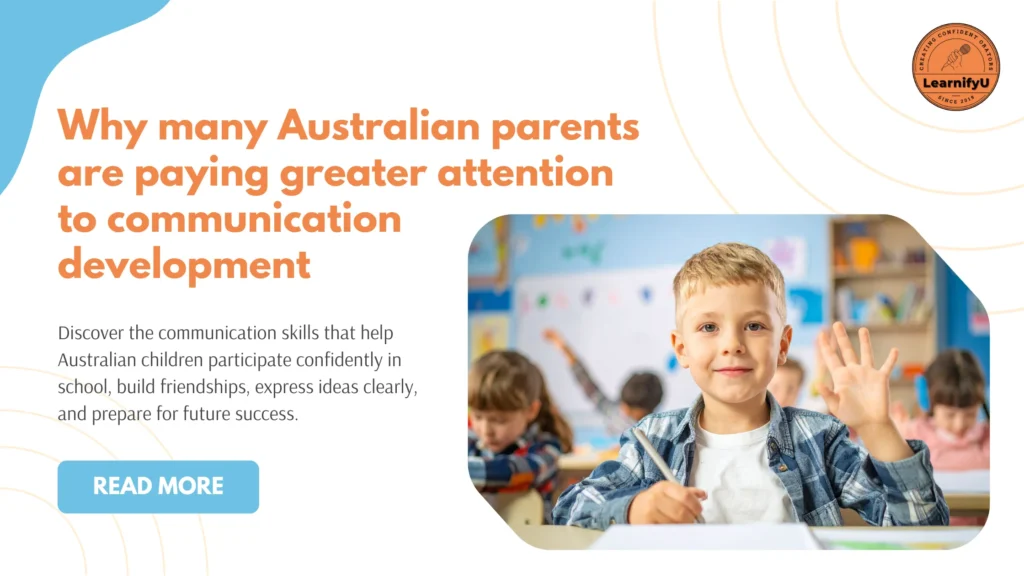
Many parents notice an interesting contrast at home. Their child understands –– lessons, completes homework independently and asks thoughtful questions during family conversations. Yet the same child becomes noticeably –– quieter in school, avoids volunteering answers or hesitates when asked to speak in front of classmates.
This is becoming a common concern.
Knowing the right answer & feeling comfortable saying it aloud are not the –– “same” skill.
Communication is no longer viewed simply as the ability to speak – “fluent” English. It now includes listening carefully, organising thoughts, expressing opinions respectfully, asking meaningful questions and participating confidently in discussions.
These abilities are gradually becoming part of everyday learning –– making communication one of the most valuable life skills children can develop alongside academics.
Classrooms Have Changed Over the Years
Not long ago, many classrooms followed a simple pattern. Teachers explained concepts, students listened, completed assignments and appeared for examinations.
Today’s learning environment looks quite different.
Children regularly take part in:
- Group discussions
- Collaborative projects
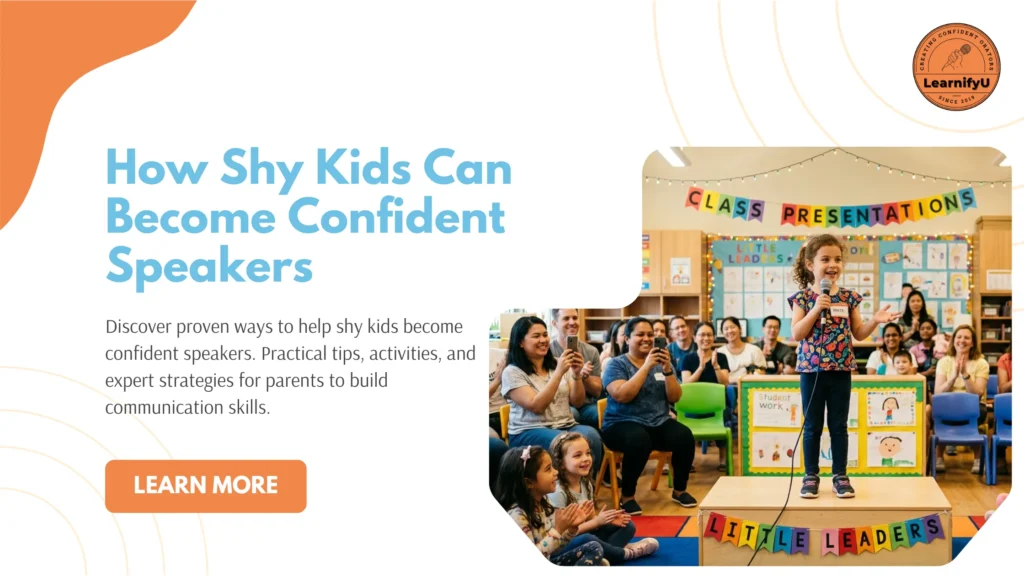
- Class presentations
- Show-and-tell activities
- Research assignments
- Peer learning sessions
- Creative problem solving tasks
These activities reward participation as much as preparation.
A child who can explain an idea clearly often contributes more effectively during collaborative learning than someone who prefers to remain silent –– even if both understand the topic equally well.
Communication has quietly become part of the learning process itself.
Why Some Children Speak Freely at Home but Stay Quiet in School
Parents often say,
“At home, my child talks all the time. In school, the teacher says they hardly speak.”
This difference is completely understandable.
Home feels familiar.
Children know they won’t be judged for forgetting a word or making a mistake.
A classroom introduces a different experience altogether.
There are teachers, classmates, expectations and the possibility of getting something wrong in front of others.
For some children – this changes everything.
They begin thinking about – how they sound instead of focusing on what they want to say.
The hesitation has little to do with intelligence.
More often – it reflects uncertainty about speaking in a larger group.
Communication Is More Than Speaking Fluent English
Many parents associate communication skills only with language proficiency.
In reality, communication involves several smaller abilities working together.
Children learn to:
- organise thoughts before speaking
- explain ideas clearly
- ask relevant questions
- listen without interrupting
- respond thoughtfully
- express disagreement respectfully
- adapt their communication to different situations
These abilities develop gradually through – regular practice rather than memorisation.
A child with a strong vocabulary may still hesitate to participate –if they lack confidence.
Likewise, a child with average vocabulary can communicate effectively when –– they feel comfortable expressing themselves.
Why Confidence Often Begins with Small Conversations
Parents sometimes expect confidence to appear during a school presentation.
More often, it begins much earlier.
Confidence grows through ordinary conversations.
Answering questions at the dinner table.
Explaining how a science experiment worked.
Sharing an opinion about a story.
Describing something interesting that happened during the day.
These simple interactions teach children something important.
Their thoughts are worth listening to.
Over time, this belief makes classroom participation feel less intimidating.
Learning to Express Ideas Is Becoming a Future Skill
Across many schools in Singapore –– children are encouraged to think independently rather than simply memorise information.
Teachers frequently ask questions that have more than one acceptable answer.
Instead of asking,
“What is the correct answer?”
they might ask,
“What do you think?”
or
“Why do you believe that?”
These questions require children to explain their reasoning.
This shift places greater importance on communication.
Knowing something is “valuable”.
Being able to explain it clearly is equally valuable.
Reading, Listening and Speaking Work Together
Communication does not develop through speaking practice alone.
Children who read regularly often become familiar with –– sentence patterns, new vocabulary & different ways of expressing ideas.
Listening also plays an important role.
Children who actively listen during conversations usually become better at –– responding thoughtfully.
This is one reason many educators encourage reading, storytelling and discussion together rather than –– treating them as separate activities.
Each strengthens the others.
Technology Has Changed the Way Children Communicate
Children today spend far more time interacting with screens than – previous generations.
Messages are often typed instead of spoken.
Questions are answered with short replies.
Many conversations happen through devices rather than –– face-to-face interaction.
While technology offers many advantages – it cannot fully replace everyday conversation.
Children still need opportunities to:
- explain ideas verbally
- maintain eye contact
- listen actively
- respond thoughtfully
- speak confidently in front of others
These remain human skills that continue to matter – regardless of how technology evolves.
Communication Skills Extend Beyond the Classroom
Parents often think about communication only in relation to school.
Its influence reaches much further.
Children use communication when they:
- make new friends
- resolve disagreements
- participate in sports
- work on group projects
- join community activities
- interact with teachers
- express emotions clearly
As children grow older – these same skills support interviews, leadership opportunities and professional relationships.
Strong communication becomes part of everyday life rather than something reserved for –– “presentations”.
Creating Opportunities Instead of Pressure
One of the biggest misconceptions is that –– children become confident simply by being told to speak more.
Confidence rarely develops through pressure.
It develops through repeated opportunities.
Parents can support this by encouraging everyday conversations without turning –– every discussion into a lesson.
Simple questions often work better than constant correction.
Instead of asking only,
“Did you finish your homework?”
try asking,
“What was the most interesting thing you learned today?”
Questions like these encourage children to –– think, explain & speak naturally.
Communication Is a Skill That Grows with Practice
No child becomes a confident communicator overnight.
Some children begin participating after a few encouraging experiences.
Others take longer.
Neither journey is unusual.
What matters is consistency.
Children gradually become more comfortable –– when they experience conversations where they feel heard rather than evaluated.
Families looking for structured opportunities to strengthen speaking confidence often choose –– guided programmes that allow children to practise expressing ideas in a supportive environment. LearnifyU’s Online Communication & Public Speaking Programs for Kids in Singapore are designed to help children build confidence through interactive discussions, presentations, storytelling and practical speaking activities suited to different age groups.
Simple Habits That Encourage Better Communication
Children don’t develop communication skills only during formal lessons.
Some of the most valuable learning happens during ordinary family routines.
Small habits often make a noticeable difference over time.
Encourage complete conversations
Instead of accepting one word answers, ask questions that invite children to explain their thinking.
Questions like –– “What made you enjoy today’s science lesson?” or “How would you solve that problem differently?” naturally encourage longer conversations.
Give children time to answer
Adults often step in too quickly when children pause.
Allowing a few extra seconds gives children time to organise their thoughts and respond independently.
Those moments quietly build confidence.
Let children solve everyday situations
Ordering food, greeting visitors, asking questions in a shop or thanking someone after receiving help are all –– “practical opportunities” to communicate.
These experiences feel natural because they are part of everyday life.
Read and discuss together
Reading becomes more meaningful – when children are encouraged to share opinions rather than simply finish a book.
Ask what surprised them.
Ask which character they admired.
Ask how they would change the ending.
The conversation matters as much as the reading itself.
Supporting Your Child's Communication Journey
Every child has a different starting point.
Some children enjoy speaking from an early age.
Others prefer listening before sharing their thoughts.
Neither approach is right or wrong.
The objective is not to change a child’s personality.
The goal is helping every child feel comfortable expressing ideas when they choose to speak.
FAQs - Frequently Asked Questions
Many schools now encourage discussions, presentations and collaborative learning alongside academic achievement. Children who communicate clearly often participate more confidently during these activities.
Yes. Many children understand lessons well -but hesitate because they worry about making mistakes or speaking in front of classmates. Confidence in speaking develops separately from academic understanding.
Absolutely. Everyday conversations, reading together, encouraging children to –– explain ideas and giving them opportunities to speak independently all contribute to stronger communication over time.
No –– Communication also includes listening carefully, expressing ideas clearly, asking thoughtful questions, explaining opinions & interacting confidently with others.
They provide regular opportunities to practise speaking, participate in discussions, organise thoughts and communicate in a supportive environment –– where children gradually become more comfortable using their voice.
People Also Ask
Encourage – daily conversations, ask open ended questions, involve children in family discussions, read together and give them opportunities to express their own “opinions” –– without interrupting or correcting every sentence.
Home feels familiar and emotionally safe. School introduces larger groups, teachers and classmates –– making some children more self conscious about speaking. This difference is very common.
Communication begins developing from early childhood. Children as young as four or five years old benefit from activities –– that encourage conversation, storytelling, listening and self-expression.
Yes. Strong communication supports teamwork, leadership, friendships, interviews, problem-solving and workplace success later in life. It remains valuable long after formal education ends.
Not exactly. Public speaking is one part of communication. Communication also includes –– listening, asking questions, explaining ideas, participating in discussions and expressing thoughts confidently in everyday situations.
Final Thoughts
Academic knowledge opens many doors.
Communication helps children walk through them with confidence.
As schools continue encouraging discussion, collaboration and presentation-based learning –– children who feel comfortable expressing their thoughts are often better prepared to participate fully in the learning experience.
The encouraging news is that communication is not a talent reserved for a few confident children.
It is a skill that develops through regular conversation, thoughtful encouragement and meaningful opportunities to speak.
Whether a child is naturally outgoing or prefers taking time before speaking –– steady practice helps build confidence one conversation at a time.
Helping children discover their voice today prepares them not only for school, but also for –– friendships, leadership opportunities & the many conversations that will shape their future.