Why Communication Skills Matter for Kids in US Schools
Communication skills matter for kids in US schools more than ever today’s time. Classrooms are no longer limited to textbooks and silent learning. Students are expected to share – ideas, ask questions, participate in discussions & work in teams.
Children who can express themselves clearly often feel more “confident” in school. They participate more in class. They connect better with classmates and teachers. They also perform better in presentations & collaborative projects.
Strong communication skills help children “succeed” not only in academics but also in everyday life.
The Role of Communication in Modern US Classrooms
Schools across the United States encourage active participation. Students are expected to discuss – ideas, present opinions, and work together on group assignments.
Many classroom activities involve communication skills such as:
- Show and tell presentations
- Group discussions
- School debates
- Collaborative projects
- Classroom storytelling
Children who can explain their thoughts clearly often stand out in these situations. They feel comfortable sharing ideas and answering questions.
However many children hesitate to speak in front of others. Some struggle to organize their thoughts. Others lack confidence when speaking in English.
This is why communication development has become an important focus for parents and educators.
Why Some Children Struggle to Communicate
Communication challenges are common among school age children. Many kids understand concepts well but – find it difficult to express them clearly.
Some common reasons include:
- Limited vocabulary
- Fear of making mistakes
- Lack of speaking practice
- Shyness or social anxiety
- Difficulty organizing thoughts
In classrooms where participation matters, these challenges can affect confidence.
A child who hesitates to speak may avoid raising their hand. They may stay quiet during group discussions. Over time – this can reduce classroom participation.
Early communication training can help children overcome these barriers.
Communication Skills & Academic Success
Strong communication skills support learning in many ways. Children who communicate well often – show better academic engagement.
When students can express their thoughts clearly – they can:
- Ask questions when they do not understand something
- Share ideas during classroom discussions
- Explain answers in detail
- Present projects confidently
These abilities improve learning outcomes.
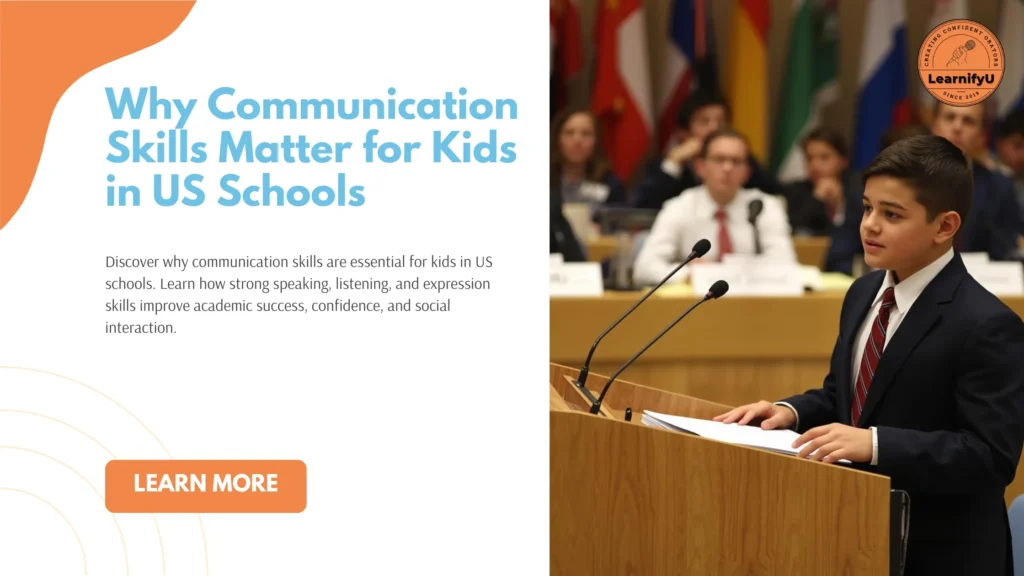
Many US schools also emphasize presentation skills. Students are often asked to – present projects or speak in front of the class.
Children who develop speaking confidence early find these activities easier.
Programs such as communication skills classes for kids in the USA help students build clarity, confidence & better classroom participation through guided practice.
Communication Skills & Social Confidence
School is also a social environment. Children interact with classmates every day. They build friendships through: conversations, teamwork & shared activities.
Good communication helps children:
- Express feelings clearly
- Resolve conflicts calmly
- Build friendships
- Participate in group activities
Children who communicate confidently often feel more “comfortable” in social settings.
They also develop emotional awareness. This helps them understand others better & respond thoughtfully in conversations.
These skills contribute to overall personality development & social growth.
Public Speaking in School Activities
Many schools encourage students to participate in – presentations, storytelling or debates. These activities build leadership & confidence.
Public speaking helps children:
- Organize thoughts clearly
- Speak with confidence
- Develop leadership skills
- Improve body language & voice clarity
Children who practice these skills regularly often – perform better during school presentations.
Parents looking to support these abilities often explore public speaking classes for kids in the USA where children practice structured speaking in a supportive environment.
The Importance of Spoken English and Expression
For many children – the biggest communication challenge is expressing thoughts in clear & fluent English.
This is especially true for children growing up in multicultural environments – where multiple languages may be spoken at home.
Developing spoken English skills helps children:
- Form sentences confidently
- Improve vocabulary
- Speak with better clarity
- communicate ideas effectively in school
With the right guidance – children gradually become more comfortable speaking in everyday situations.
Many parents choose spoken English classes for kids in the USA to help children build fluency & natural expression.
Signs Your Child May Need Communication Support
Every child develops at their own pace. However – some signs may indicate that a child needs extra communication support.
Parents often notice patterns such as:
- Hesitation while speaking in class
- Difficulty explaining thoughts
- Avoiding presentations or discussions
- Limited vocabulary
- Low confidence during conversations
These challenges are normal. With guided practice and encouragement – children can develop stronger communication habits.
How Parents Can Support Communication Development
Parents play an important role in helping children become confident communicators.
Simple daily activities can make a difference.
Encourage your child to:
- Share stories about their day
- Explain ideas during family conversations
- Read aloud regularly
- Participate in discussions at home
These activities help children practice expressing thoughts in a comfortable environment.
Structured learning programs can also provide consistent speaking practice, feedback & confidence building exercises.
Building Communication Skills for the Future
Communication skills are not just school skills. They are life skills.
Kids who learn to express themselves clearly develop stronger confidence as they grow. They participate more actively in school, social activities and leadership opportunities.
Developing communication abilities early helps children prepare for future challenges. It supports: academic success, personal growth & professional development later in life.
By nurturing these skills early – parents give children a powerful advantage.
FAQs - Frequently Asked Questions
Communication skills help children express ideas clearly in class. US schools encourage participation through discussions, presentations & group projects. Kids who communicate confidently often engage more – in classroom activities & understand lessons better.
Children begin learning communication from an early age. However, structured communication development can start – as early as 4 years old. Early practice helps kids – build confidence, vocabulary & clarity while speaking.
Children who communicate well ask better questions, participate in discussions & present ideas confidently. These abilities help them perform better –in school presentations, collaborative projects & classroom learning activities.
Some common signs include hesitation while speaking, avoiding class participation, difficulty explaining ideas, or limited vocabulary. With guided practice and confidence-building activities, children can gradually overcome these challenges.
Yes. Structured communication programs help children practice speaking, listening, and expressing ideas clearly. Interactive sessions, storytelling, and presentation exercises help kids develop confidence and communication abilities over time.