
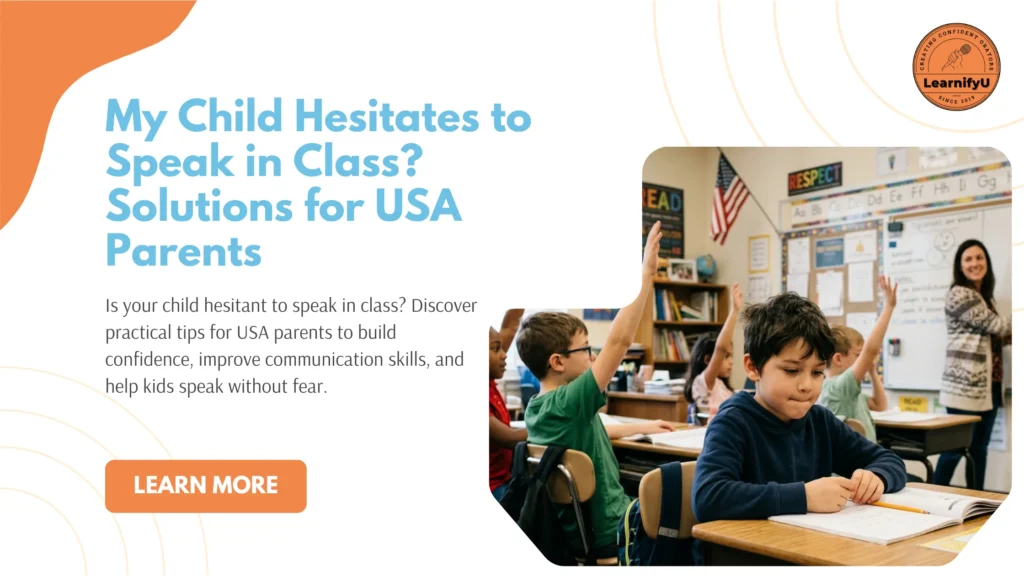
My Child Hesitates to Speak in Class – What Should I Do? (USA Parents Guide)
If you’ve ever heard from your child’s teacher – “They understand everything but don’t speak in class,” you’re not alone.
Many parents across the United States face this concern that kids who are bright, capable & thoughtful – yet hesitate to raise their hand, share ideas or participate in classroom discussions.
The good news? This is completely normal & fixable with the right approach.
In this guide – we’ll help you understand why kids hesitate to speak, and more importantly, what you can do to build their confidence step by step.
Why Do Kids Hesitate to Speak in Class?
Before solving the problem – it’s crucial to understand the root cause.
Every child is different but here are the most common reasons –
1. Fear of Making Mistakes
Kids often worry about saying something wrong & being judged by classmates.
2. Lack of Confidence
Even if they know the answer – they may not feel “confident” enough to speak publicly.
3. Shyness or Introverted Nature
Some children naturally take more time to open up in group settings.
4. Limited Communication Skills
They may struggle to organize thoughts or express ideas clearly.
5. Fear of Attention
Speaking in class puts them in the spotlight & that can feel overwhelming.
👉 In many USA classrooms where participation is encouraged – this hesitation can hold children back academically and socially.
Why This Should Not Be Ignored
It’s easy to assume – “They’ll grow out of it.”
But hesitation in speaking can affect:
- Classroom participation
- Academic performance
- Social confidence
- Leadership skills
Over time – children who don’t speak up may start doubting themselves even if they are capable.
👉 That’s why early intervention is important.
How to Help Your Child Speak Confidently in Class
Let’s focus on practical, parent friendly solutions 👇
1. Create a Safe Space at Home
Confidence starts at home.
Encourage your child to:
- Share their thoughts freely
- Talk about their day
- Express opinions without fear of correction
👉 Avoid interrupting or correcting too quickly. Let them finish speaking.
2. Practice Small Speaking Activities Daily
Start small. You don’t need formal training immediately.
Try:
- Asking open ended questions
- Storytelling sessions
- “Explain your day” activities
- Role-playing classroom situations
These simple exercises improve communication skills for kids naturally.
3. Focus on Effort & Not Perfection
Instead of correcting mistakes immediately:
- Appreciate their effort
- Encourage them to try again
👉 This reduces fear in kids & builds confidence eventually.
4. Teach Them How to Structure Thoughts
Many kids hesitate – because they don’t know how to start speaking.
Help them follow a simple structure:
- Start with a point
- Add 1–2 supporting ideas
- End with a conclusion
👉 This improves clarity & public speaking skills for kids.
5. Encourage Participation Outside School
Look for opportunities where your child can speak in a low pressure environment:
- Family gatherings
- Small group activities
- Online sessions with peers
👉 Gradual exposure reduces fear of speaking in class.
6. Limit Passive Screen Time
Excessive screen time reduces real world interaction.
Instead, encourage:
- Conversations
- Reading aloud
- Interactive activities
👉 It directly improves confidence & communication skills in kids.
7. Consider Structured Learning Programs
Sometimes, children need expert guidance.
Enrolling your child in structured communication programs can accelerate progress.
For example, online communication skills classes for kids in the USA provide:
- Guided speaking practice
- Peer interaction
- Professional feedback
Similarly, public speaking classes for kids in the USA help children:
- Overcome stage fear
- Speak confidently in groups
- Present ideas clearly
👉 These programs create a safe, structured environment for consistent improvement.
What Progress Looks Like (Realistically)
Parents often have a question: “How long will it take?”
Here’s what to expect:
2–3 weeks:
Slight improvement in comfort level
4–6 weeks:
More participation at home and school
2–3 months:
Noticeable confidence and clarity
👉 Consistency matters more than speed.
Common Mistakes Parents Should Avoid
Even with good intentions – some actions can slow progress:
❌ Forcing the child to speak
❌ Comparing them with other kids
❌ Correcting every mistake immediately
❌ Labeling them as “shy”
👉 Instead focus on encouragement & gradual growth.
When Should You Be Concerned?
If your child:
- Avoids speaking completely
- Shows anxiety in social situations
- Struggles to express basic thoughts
👉 It may be time to take proactive steps through – structured learning or expert guidance.
The Goal Is Not Just Speaking—It’s Confidence
Helping your child speak in class is not just about answering questions.
It’s about:
- Expressing ideas clearly
- Building self belief
- Developing leadership skills
These are lifelong skills that go beyond the classroom.
Final Thoughts for USA Parents
In today’s world, communication is one of the most important skills a child can develop.
If your child hesitates to speak in class – don’t ignore it but don’t panic either.
With the right support, encouragement & environment – every child can become a confident speaker.
Start small. Stay consistent. And most importantly, be patient.
FAQs - Frequently Asked Questions
Yes – it is very common. Many children go through this phase especially in early school years.
Start with small daily conversations, encourage their expression & gradually expose them to speaking opportunities.
No. Forcing can increase fear. Encourage gently and build confidence step by step.
Yes – structured programs provide guided practice, feedback, and a safe environment—leading to faster improvement.
Kids can start as early as 4–6 years with age appropriate activities and structured programs.