
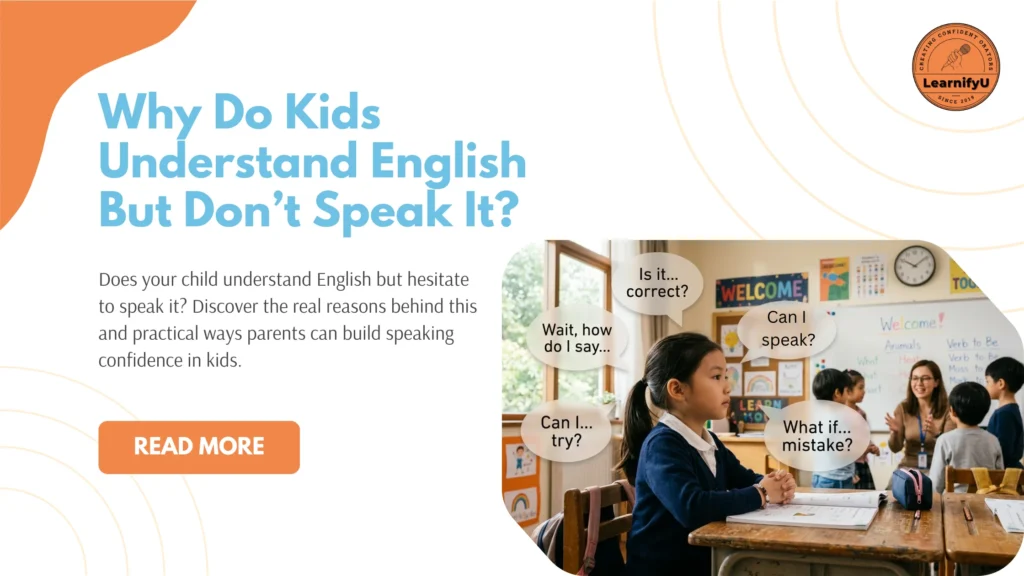
Why Do Kids Understand English But Don’t Speak It?
Many parents notice something confusing while helping their children learn English:
Their child understands instructions, watches English cartoons, follows classroom conversations and even knows vocabulary but still hesitates to – “speak English confidently”.
If this sounds familiar – you are not alone.
This is one of the most common concerns parents face when trying to improve their child’s English speaking skills & overall communication confidence.
The good news is that understanding English but not speaking it is usually not a language problem. In most cases – it is connected to confidence, fear of mistakes, lack of speaking practice, or limited exposure to real conversations.
Here we’ll explore:
- Why kids hesitate to speak English
- Common mistakes parents unknowingly make
- Practical ways to improve spoken English confidence
- Activities that encourage natural speaking
Is It Normal for Kids to Understand English But Not Speak It?
Yes – completely.
Language learning happens in stages.
Most children develop:
- Listening skills first
- Understanding second
- Speaking ability later
This means a child may understand almost everything they hear – but still feel uncomfortable speaking aloud.
This stage is especially common among children who:
- Study English academically
- Watch English content regularly
- Hear English at school but speak another language at home
The problem is not intelligence or capability. Often, the child simply needs the “right environment” and “encouragement” to start expressing themselves confidently.
Why Kids Hesitate to Speak English
There is rarely one single reason. Usually multiple factors affect a child’s speaking confidence.
1. Fear of Making Mistakes
This is the biggest reason.
Many children worry:
- “What if I say the wrong word?”
- “What if people laugh?”
- “What if my pronunciation is wrong?”
When children fear embarrassment – they avoid speaking altogether.
Unfortunately, excessive correction from adults can increase this fear.
Instead of focusing on perfect grammar – children need a safe space to practise speaking naturally.
2. Lack of Speaking Practice
Many kids spend years:
- Reading English
- Writing English
- Memorising grammar
But they rarely practise real conversations.
Speaking is a skill that improves only through “active usage”.
A child who listens well but doesn’t speak regularly may struggle with:
- Sentence formation
- Fluency
- Confidence
- Quick thinking in conversations
This is why regular speaking activities are essential for improving spoken English for kids.
3. Low Confidence and Shyness
Some children are naturally reserved.
Even if they know the answer, they may hesitate because they:
- Overthink
- Feel shy
- Avoid attention
In such cases – the issue is often more connected to confidence building than language learning itself.
Helping shy kids express themselves gradually can significantly improve communication skills over time.
We have detailed guide on: How Shy Kids Can Become Confident Speakers
4. Fear of Being Corrected Constantly
Many parents unintentionally interrupt children repeatedly while they speak:
- “That grammar is wrong.”
- “Say it properly.”
- “Your pronunciation is incorrect.”
While corrections are important, excessive interruption affects confidence.
Children begin associating speaking with pressure instead of learning.
A better approach is:
- Encourage communication first
- Correct gently later
Confidence should come before perfection.
5. Limited English Speaking Environment
If kids hear English only during classes – they may not feel comfortable using it naturally.
Language improves faster when children experience English in:
- Conversations
- Games
- Activities
- Storytelling
- Daily communication
The more natural the environment, the more comfortable kids become speaking.
Signs Your Child May Lack Speaking Confidence
Some common signs include:
- Replying in their native language despite understanding English
- Avoiding conversations
- Speaking very softly
- Hesitating before answering
- Fear of classroom participation
- Avoiding presentations or stage activities
These signs usually suggest hesitation & lack of confidence rather than poor understanding.
How Parents Can Help Kids Speak English Confidently
Improving speaking confidence does not require pressure or strict correction.
Small daily habits can make a huge difference.
1. Create a Judgment Free Environment
Kids speak more when they feel emotionally safe.
Encourage your child to –
- Express thoughts freely
- Try without fear
- Make mistakes comfortably
Avoid mocking pronunciation or comparing them with other children.
Positive reinforcement helps children develop self confidence faster.
2. Focus on Communication, Not Perfection
Many parents focus heavily on grammar.
But communication should come first.
A child saying:
“I goed there yesterday”
is still making progress because they are trying to express themselves.
Fluency develops gradually through practice & exposure.
3. Encourage Daily Speaking Practice
Even 10–15 minutes of daily conversation helps.
Simple speaking activities include:
- Describing their day
- Talking about favourite cartoons
- Explaining pictures
Sharing opinions - Reading aloud
Consistency matters more than duration.
4. Use Storytelling Activities
Storytelling improves:
- Vocabulary
- Creativity
- Fluency
- Confidence
Ask children to:
- Retell stories
- Describe movies
- Create imaginary situations
This helps them think and speak naturally in English.
5. Reduce Screen Consumption and Increase Interaction
Passive watching alone does not improve speaking.
Children improve communication skills through interaction.
Encourage:
- Family discussions
- Group activities
- Speaking games
- Role play exercises
Interactive speaking opportunities build fluency faster.
6. Appreciate Small Improvements
Confidence grows through encouragement.
Celebrate:
- Clear sentences
- Improved pronunciation
- Participation
- Effort
Children who feel appreciated become more willing to speak again.
7. Introduce Public Speaking Gradually
Public speaking activities help children:
- Think clearly
- Organise thoughts
- Speak confidently
- Improve body language
Start small:
- Speaking in front of family
- Short introductions
- Simple presentations
Gradual exposure reduces fear over time.
Why Communication Skills Matter Beyond English
Strong communication skills help children in:
- School presentations
- Interviews
- Leadership activities
- Social interaction
- Future careers
Children who communicate confidently often participate more actively in classrooms & social environments.
That’s why confidence building is equally important as – language learning.
Common Mistakes Parents Should Avoid
Here are some common mistakes that may unintentionally reduce confidence:
❌ Forcing children to speak immediately: Confidence develops gradually.
❌ Comparing them with fluent speakers: Every child learns differently.
❌ Over-correcting every sentence: Too many interruptions create hesitation.
❌ Focusing only on academics: Communication requires practical speaking exposure.
❌ Expecting quick results: Language confidence takes time and consistency.
How Long Does It Take for Kids to Speak English Confidently?
Every child progresses differently.
Some children improve within a few weeks – while others may need several months of consistent practice.
Improvement depends on:
- Practice frequency
- Confidence level
- Environment
- Encouragement
- Exposure to conversations
The key is consistency and –not pressure.
When Should Parents Seek Structured Guidance?
If your child:
- Understands English well but refuses to speak
- Avoids participation regularly
- Feels anxious while speaking
- Struggles with communication confidence
Then structured speaking programs can help.
Professional guidance provides:
- Interactive activities
- Communication exercises
- Positive peer environment
- Confidence building opportunities
Children often improve faster –when they practise in supportive learning environments.
Final Thoughts
If your child understands English but doesn’t speak confidently, don’t panic.
This is a common stage in language development.
Most children do not need pressure — they need:
- Patience
- Encouragement
- Practice
- Confidence building opportunities
When children feel safe expressing themselves – speaking improves naturally.
The goal is not perfect English overnight.
The real goal is helping children communicate confidently, express their thoughts clearly, and enjoy the learning process.
With the right support – every child can become a confident speaker.
FAQs - Frequently Asked Questions
Kids often hesitate –because of fear of mistakes, lack of confidence, limited speaking practice or shyness.
Yes – Many children develop listening and understanding skills before speaking confidently.
Create a relaxed environment, encourage daily conversations, use storytelling activities & avoid over correcting mistakes.
No. Excessive correction can reduce confidence. Focus on communication first and correct gently later.
Storytelling, role play, reading aloud, presentations and daily conversations are – highly effective.
Yes – Public speaking improves confidence, vocabulary usage, sentence formation, and communication clarity.
Kids can start developing communication confidence from an early age through – conversations and interactive activities.
Improvement varies but consistent practice & encouragement usually show –visible results over time.